_1772746035263-CVlnBaHI.png)
Customer Success Story · Permian Basin
Transforming CTB Monitoring with Edge AI
How Twin Eagle partnered with a major Permian Basin operator to achieve operational excellence, transforming CTB monitoring with edge AI, projecting a sub-six-month ROI on a single site and scaling to 300+ CTB locations across the basin.
Seconds
Detection time, leak to alarm
<4 Mbps
Optimized video stream per site
100%
Edge compute: no cloud required
<6 mo
Projected ROI on a single site
The Challenge
Mitigating 800 spills a year in the Permian Basin.
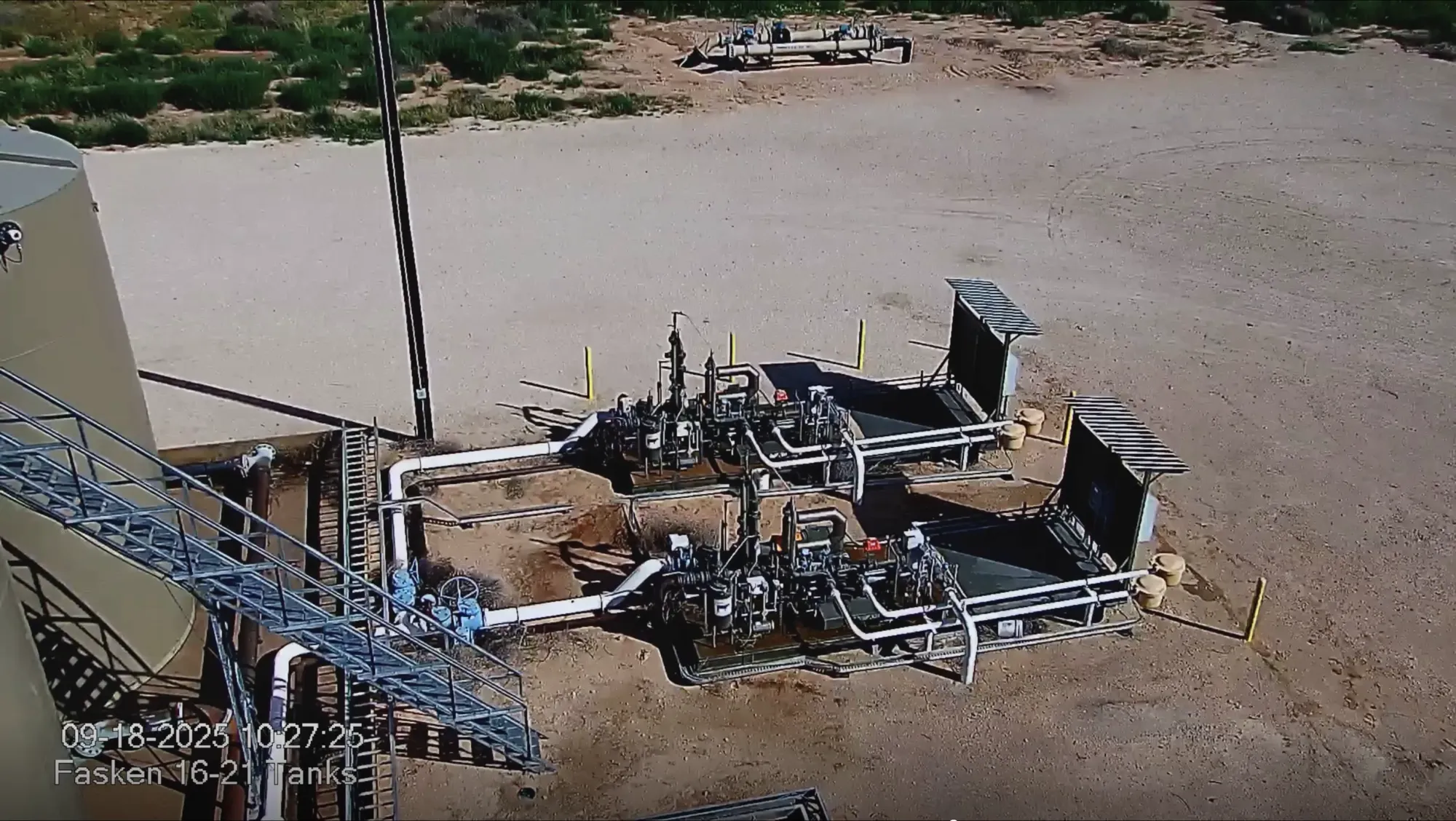
A major oil and gas operator in the Permian region was facing a significant operational hurdle: their central tank battery (CTB) locations were averaging more than 800 leaks and spills per year. They urgently needed a highly reliable, low-bandwidth solution to monitor liquid leaks, tank levels, and flare activity 24/7.
Their ultimate goal was to catch leaks within seconds, drastically reduce clean-up costs, achieve operational excellence, and project a strong public image as a responsible and environmentally conscious operator. They needed a partner who could manage the entire project from end to end, so they turned to Twin Eagle Solutions.
The Twin Eagle Solution
A turnkey, intelligent approach, engineered for the Permian.
Twin Eagle delivered a completely comprehensive, customized hardware and software stack purpose-built and hardened for the demanding Permian environment. Our team provided full project management, acting as the single point of contact for consulting, engineering, procurement, pre-programming, installation, and integration.
Because Twin Eagle owns and developed VisionAery, our industry-leading suite of AI video analytics, we were uniquely positioned to deliver an end-to-end edge AI ecosystem under one roof, from the radios on the pole to the alarms in the control room.
Why We Chose This Hardware
Strategic hardware selection: every piece chosen for a reason.
Every piece of hardware was purposefully chosen for site longevity, maximum visibility, and seamless integration into the customer's existing infrastructure.
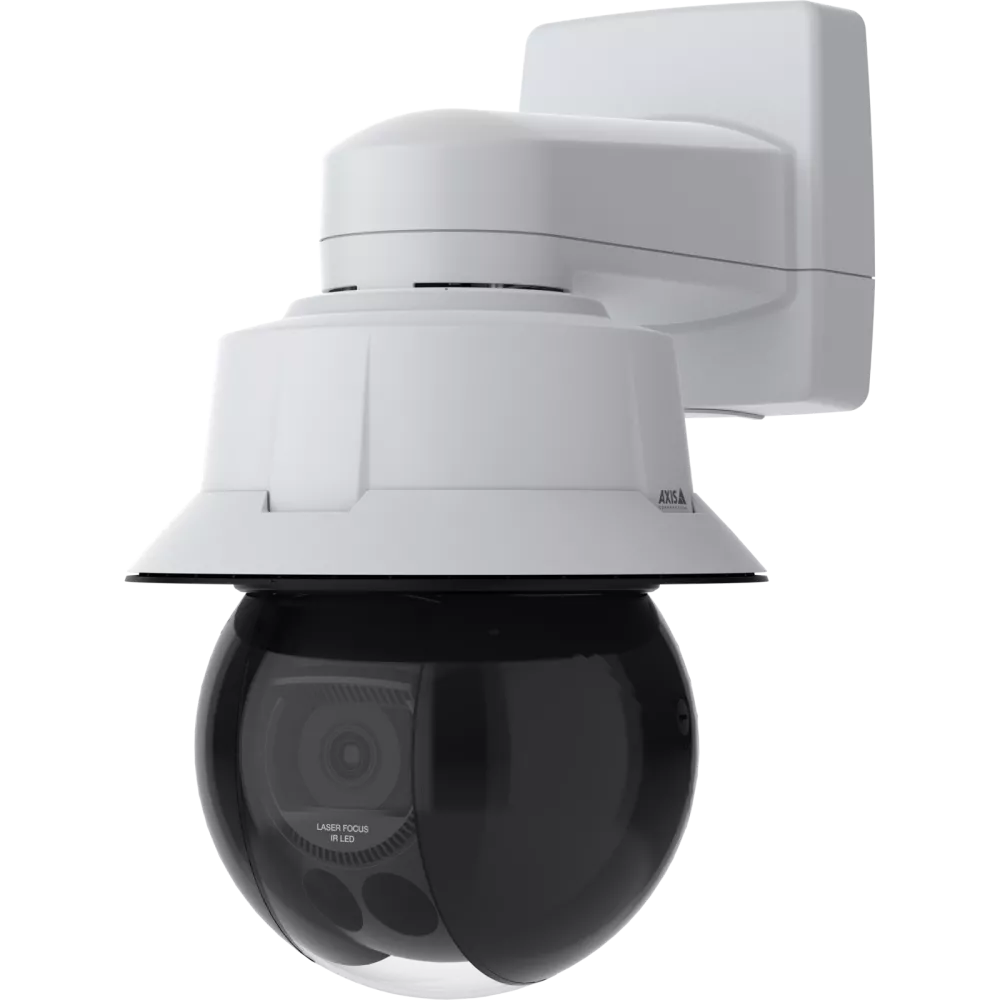
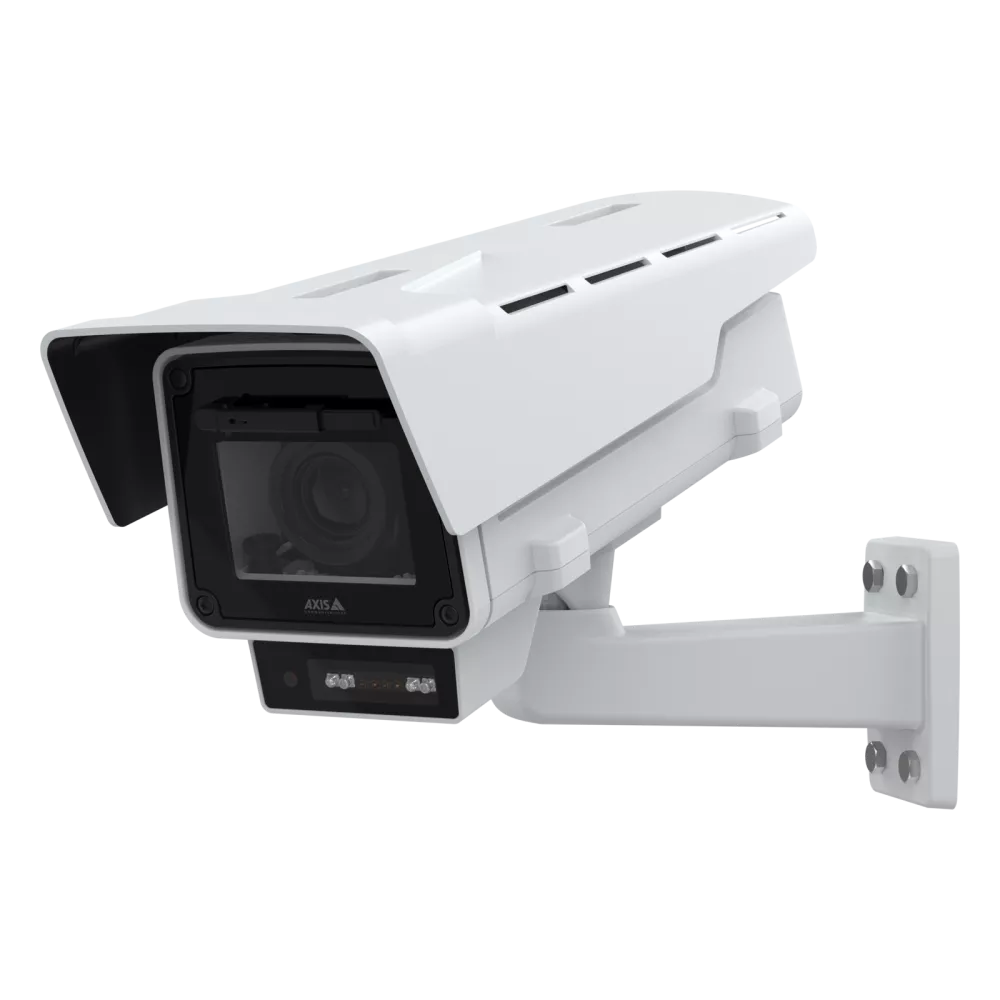
2 × Axis Q-6335LE PTZ Cameras
Liquid leak detection: puddle, spray, and vapor
The pad is rectangular, so two PTZ cameras placed in opposite corners cover the entire site between them. Our liquid leak detection app loads a different area of interest for each PTZ preset, which makes it trivial to dial in the exact zones we want monitored on each side of the tanks. We chose the Q-6335LE specifically because it has no glass dome, since domes collect dust fast in the Permian and degrade image quality between cleanings. The Q-6335LE also has high-quality built-in IR illumination, so the leak detection analytic keeps running at night without adding floodlights to the site.
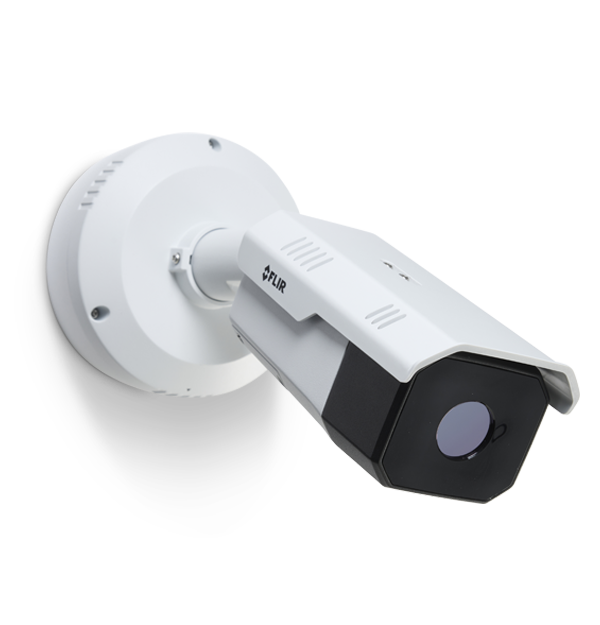
FLIR Thermal Camera, 17 mm Wide Lens
Vapor plume detection across the tank wall
FLIR's optics and image quality are the reference standard for industrial thermal, so the brand decision was easy. We picked the wide 17 mm lens deliberately so a single thermal camera covers one complete side of the tank battery (three tanks in one frame) instead of needing multiple narrower-FOV units.
Axis Q1656-LE Fixed Camera
24/7 flare monitoring
The Q1656-LE ships with the Axis ARTPEC-8 SoC, which lets us run our VisionAery flare monitoring analytic as an ACAP application directly on the camera, with no extra compute box and no extra power required for that workload. The flare analytic runs on the camera that captures the flare, end of story.
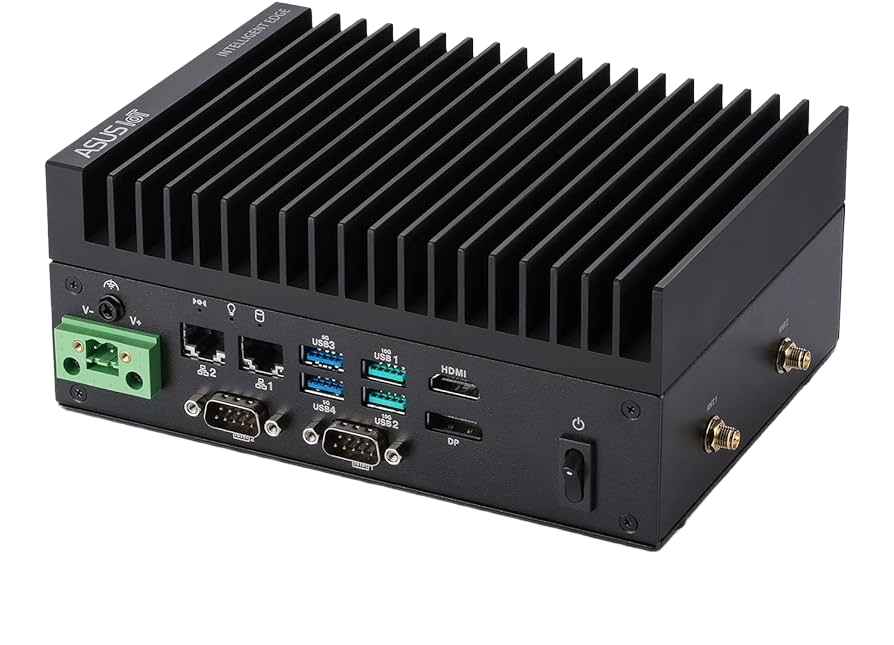
ASUS Jetson NX Edge Server
Local inference for the leak and tank-level analytics
We needed enough horsepower to run two liquid leak detection apps and the tank level monitoring app simultaneously, with headroom to add more analytics in the future without swapping hardware. The Jetson NX hits that target. It's also rated to operate at up to 70 °C, which is non-negotiable for the Permian summer.
Cambium PTMP + Microwave Backhaul
Site connectivity into the customer network
The customer was already running a legacy Cambium wireless network, so going Cambium for the new pad meant the radios dropped straight into their existing infrastructure with no new vendor to manage. Twin Eagle works across most major industrial wireless platforms, so we recommend whatever fits the customer's environment best, in this case, that was Cambium.
Seamless Integration via MQTT & Base64
Lightweight MQTT JSON payloads with Base64-encoded snapshots.
All telemetry and alarms flow into the customer's SCADA and Video Management System over MQTT, using JSON payloads. We picked MQTT because it's lightweight, runs comfortably over constrained wireless links, and is the de-facto standard for modern industrial telemetry, and the customer's stack was already built around it.
The thing that makes our payloads different is that every alarm and telemetry message includes the snapshot the analytic was looking at when it fired, embedded directly in the JSON as a Base64-encoded image.
Quick refresher: Base64 is just a way to encode binary data (like a JPEG) as plain text characters that can ride inside a normal text-based message such as JSON. The image itself is unchanged; it's simply re-expressed as a text string so it can travel inside the same payload as the rest of the alarm metadata.
The payoff is operational. When an operator gets an alarm, the snapshot is already in the alarm, so they don't have to log into a VMS, find the right camera, scrub backwards in time, and try to reconstruct what the analytic saw. They glance at the image, confirm the event, and dispatch. That single design choice cuts dispatch-decision time from minutes down to seconds.
The VisionAery Edge AI Advantage
100% edge compute: three leak modes in one app, plus alarm verification.
Centralized processing wasn't an option due to bandwidth constraints. Our deployment relied on 100% edge compute, every AI inference happens right on the site, and we tuned the video streams to use less than 4 Mbps of bandwidth per site.
VisionAery is our edge-AI video analytics platform, built in-house by Twin Eagle, and we developed every analytic running on this pad. The liquid leak detection app handles three distinct failure modes natively in a single application:
- Puddle detection: releases that have already pooled on the pad or in containment.
- Spray detection: pressurized leaks at valves, fittings, and connections.
- Vapor detection: fugitive emissions visible to the FLIR thermal camera.
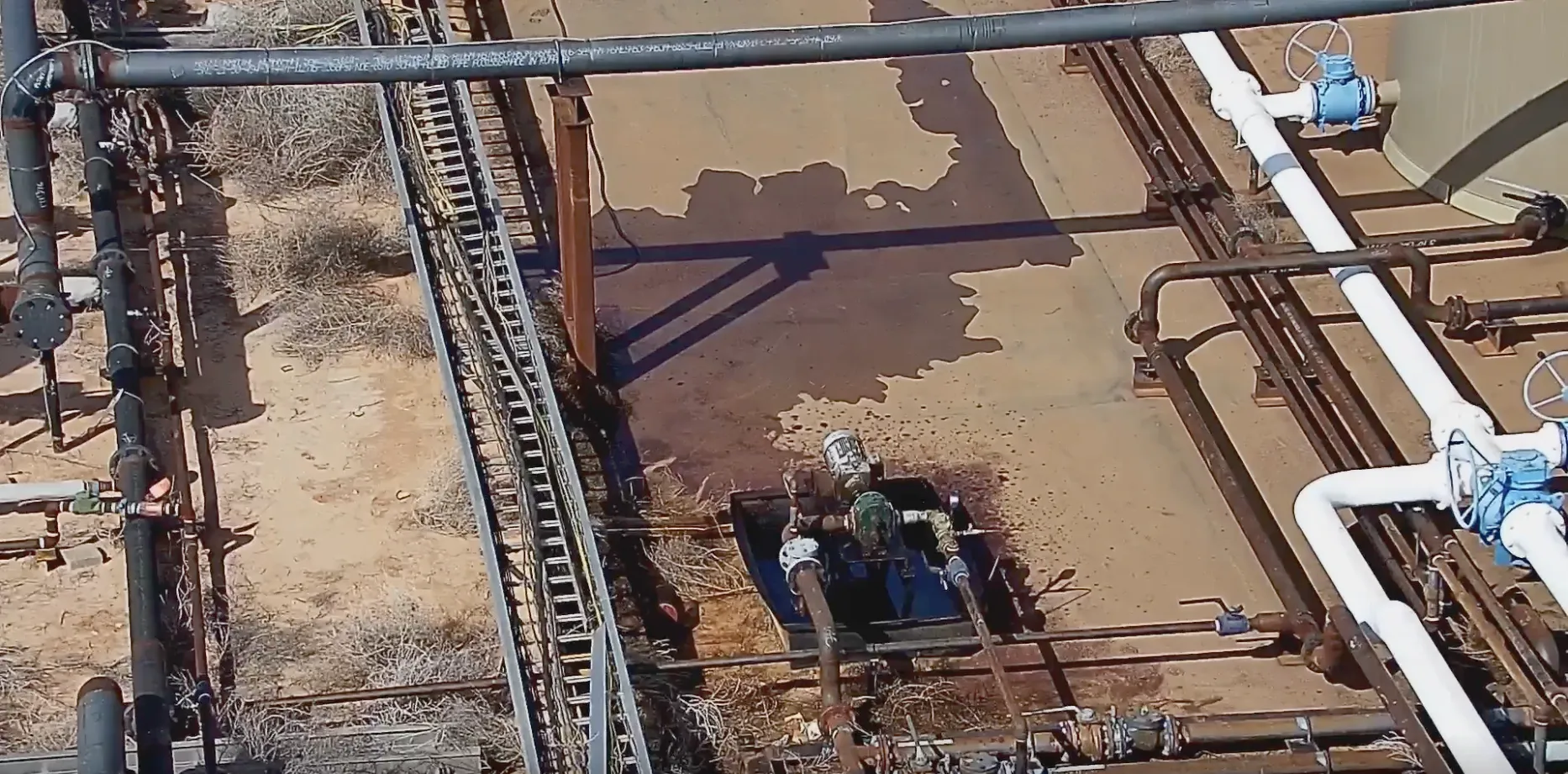
Raw camera view
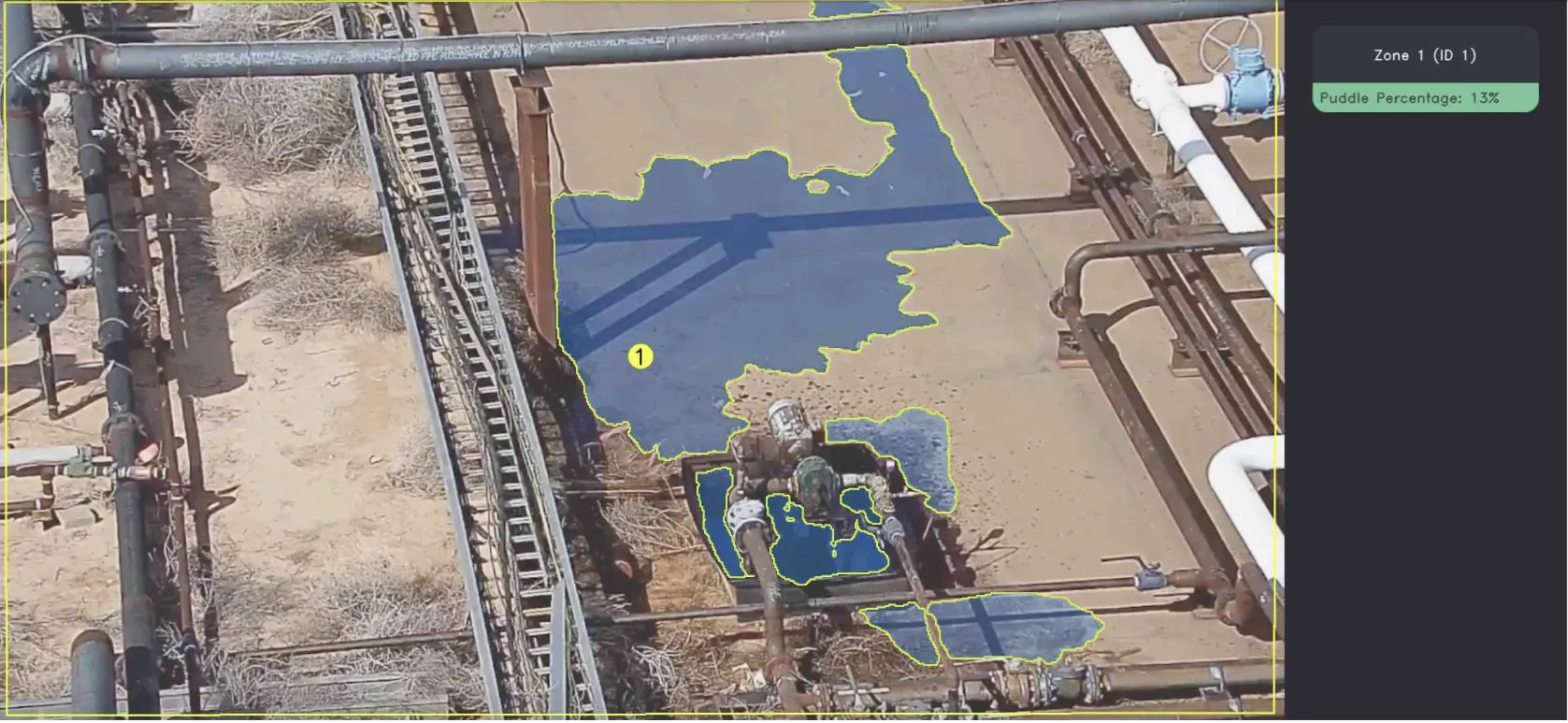
VisionAery puddle detection
Tank level monitoring runs as a separate analytic, inferring level visually and feeding the result straight into SCADA alongside the customer's existing tag structure.
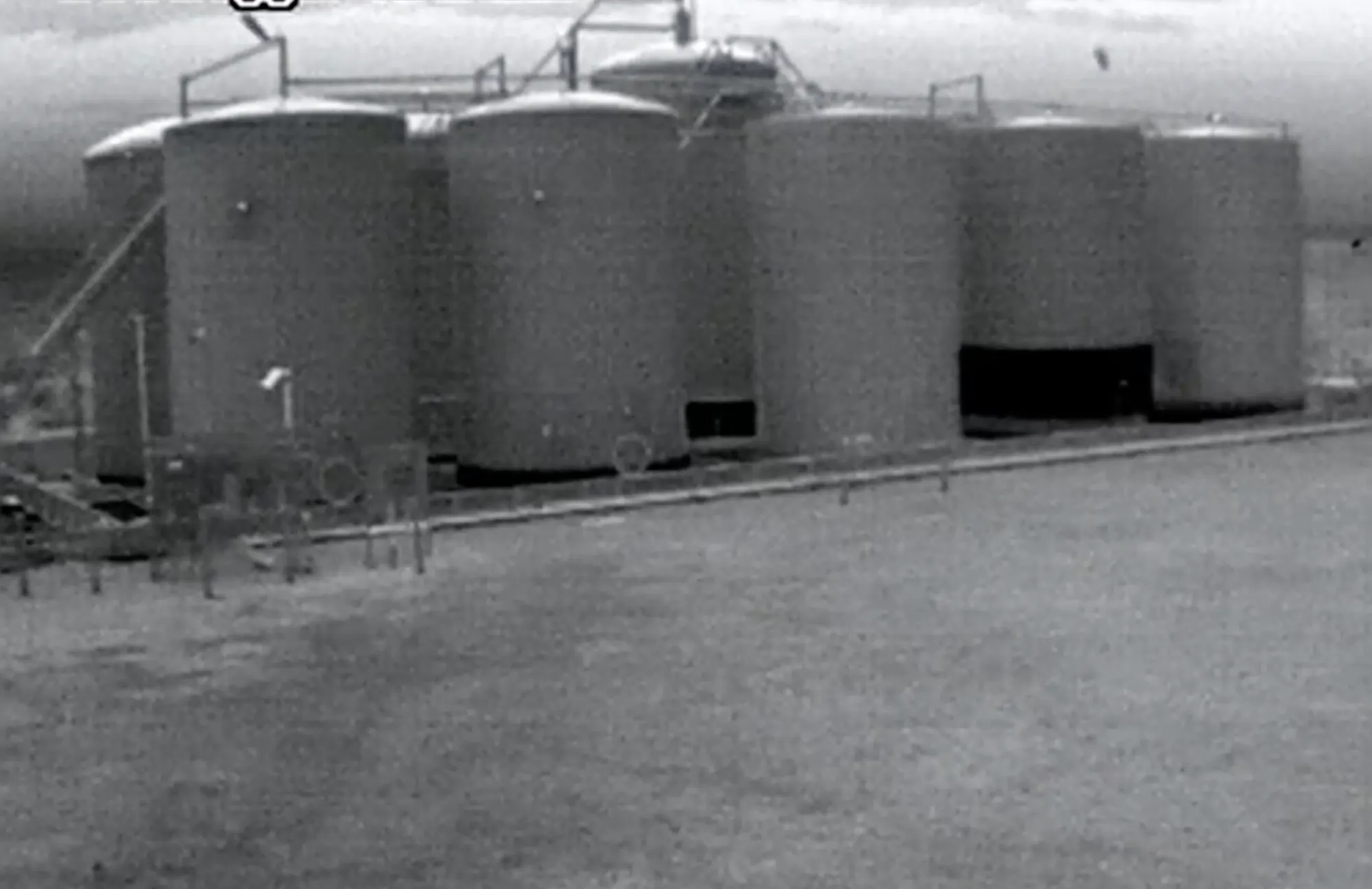
Raw thermal view
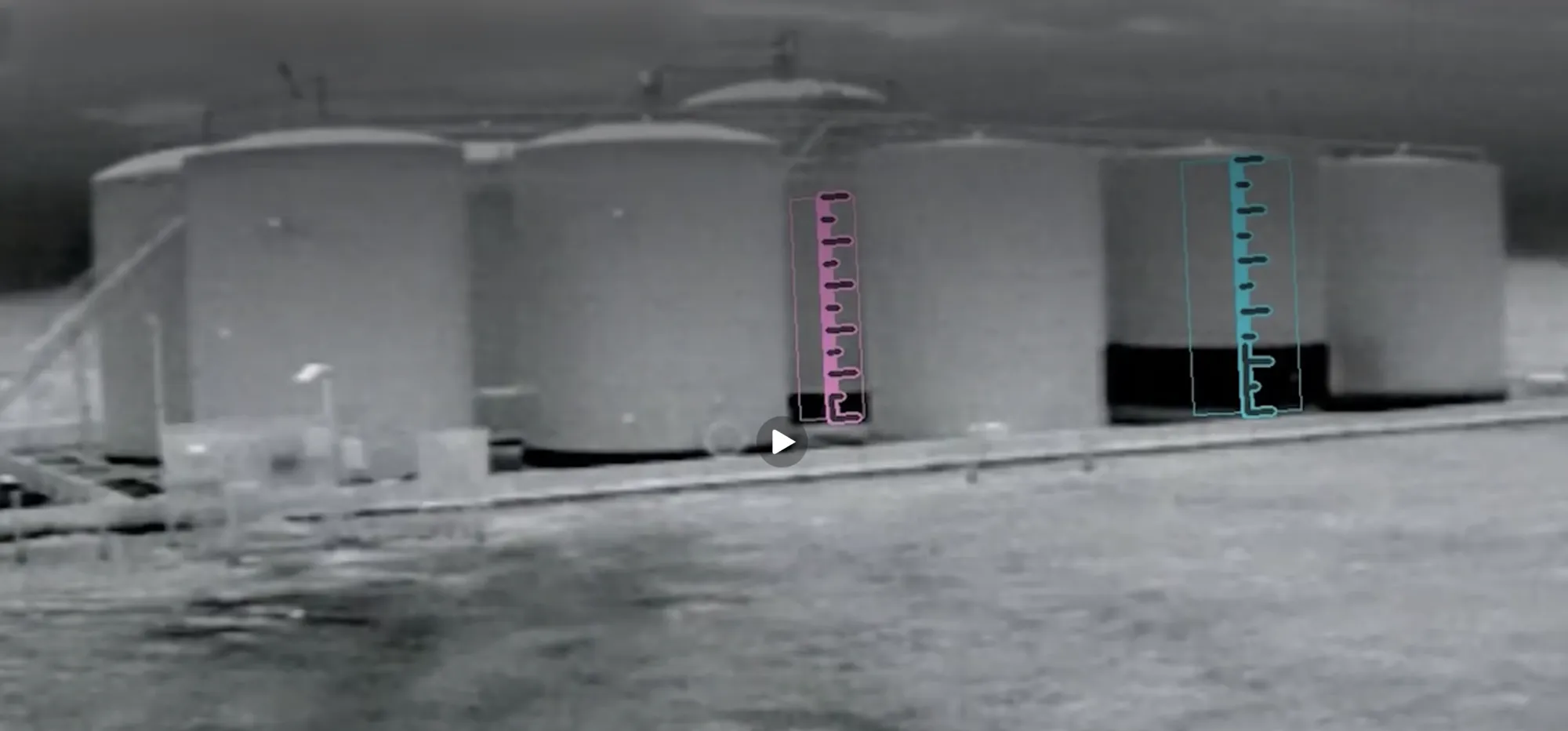
VisionAery tank-level analytic: per-tank fill columns
Flare monitoring runs as an ACAP app directly on the Axis Q1656-LE: flame area, smoke area, and Ringelmann shade are all measured at the edge, with no additional compute required.
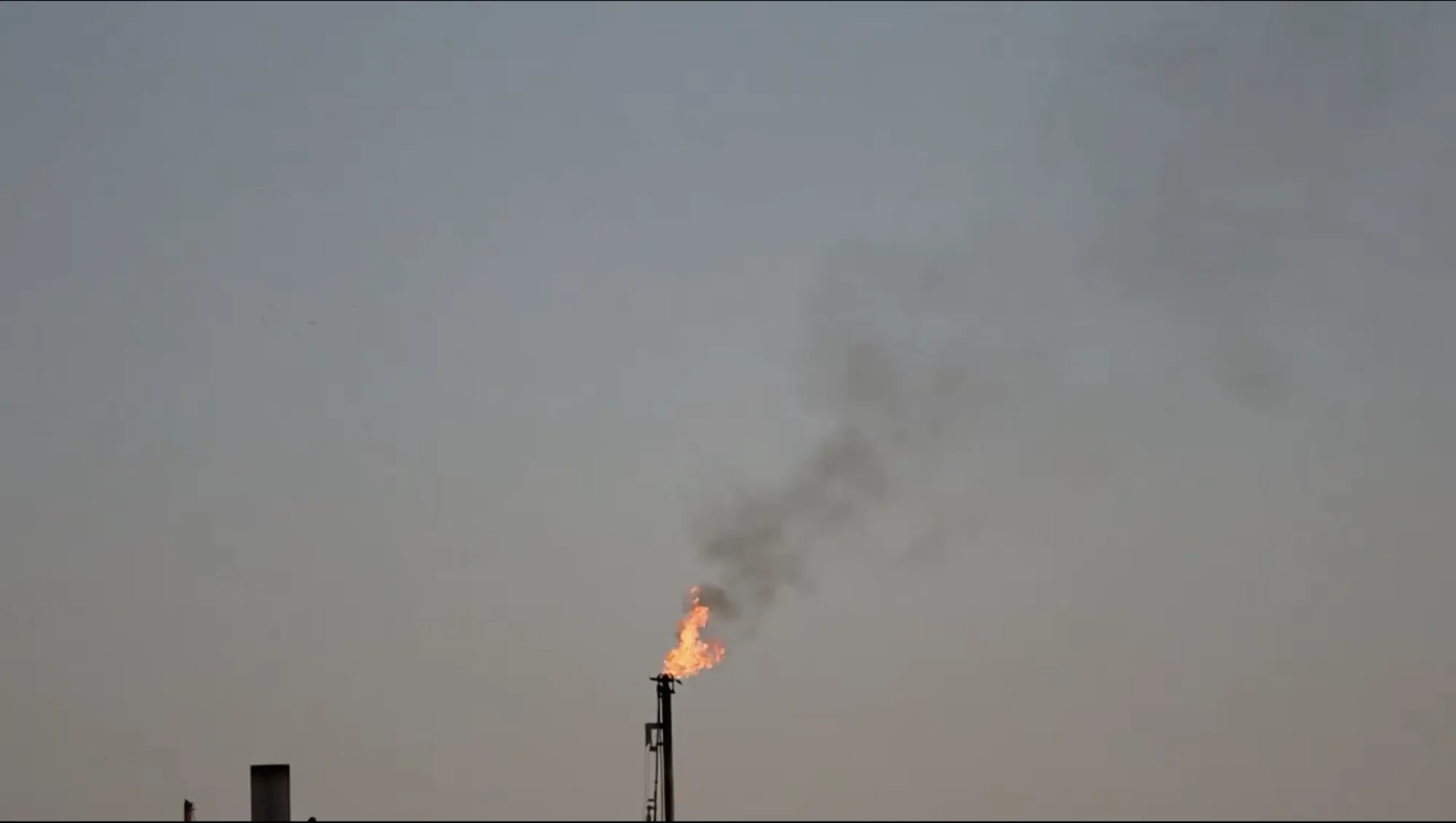
Raw camera view
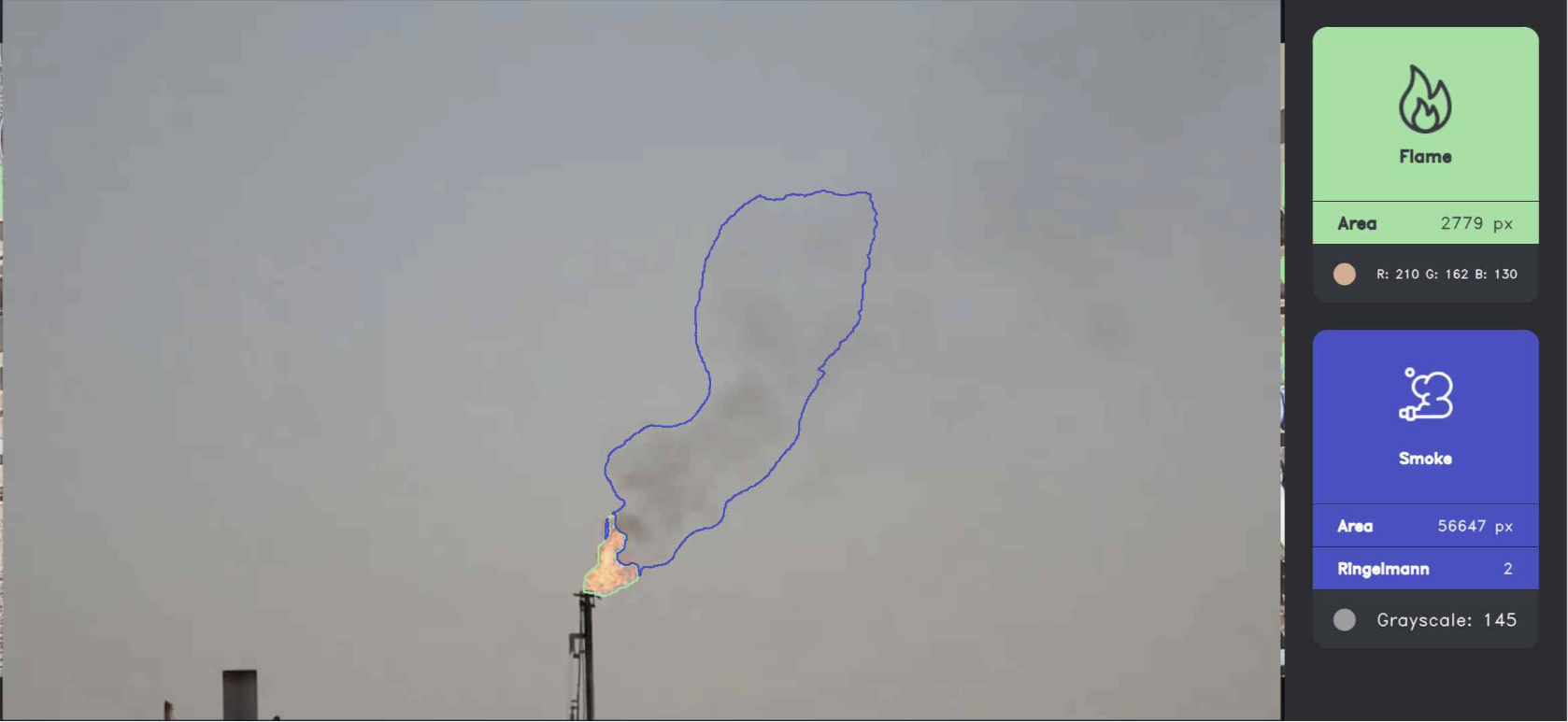
VisionAery flare monitoring: flame & smoke segmentation
To prevent alert fatigue in the control room, every Liquid Leak Detection alarm is routed through VisionAery AVA, our Alarm Verification Agent. AVA performs an in-depth AI analysis of each LLD event before it ever reaches an operator, suppressing the kind of nuisance alerts that train teams to ignore the system. Level and flare events publish straight through the same VMS and SCADA paths without AVA in the loop.
What Twin Eagle Delivered
One vendor. The whole project.
From the first whiteboard session to the final cutover, every workstream was owned by Twin Eagle. We project-managed the engagement end-to-end so the customer didn't have to coordinate between a wireless vendor, a camera vendor, an analytics vendor, and a systems integrator.
- Solution consulting and stakeholder alignment
- Hardware and software stack design and engineering
- Camera placement and field-of-view planning
- Equipment procurement and pre-provisioning before truck-roll
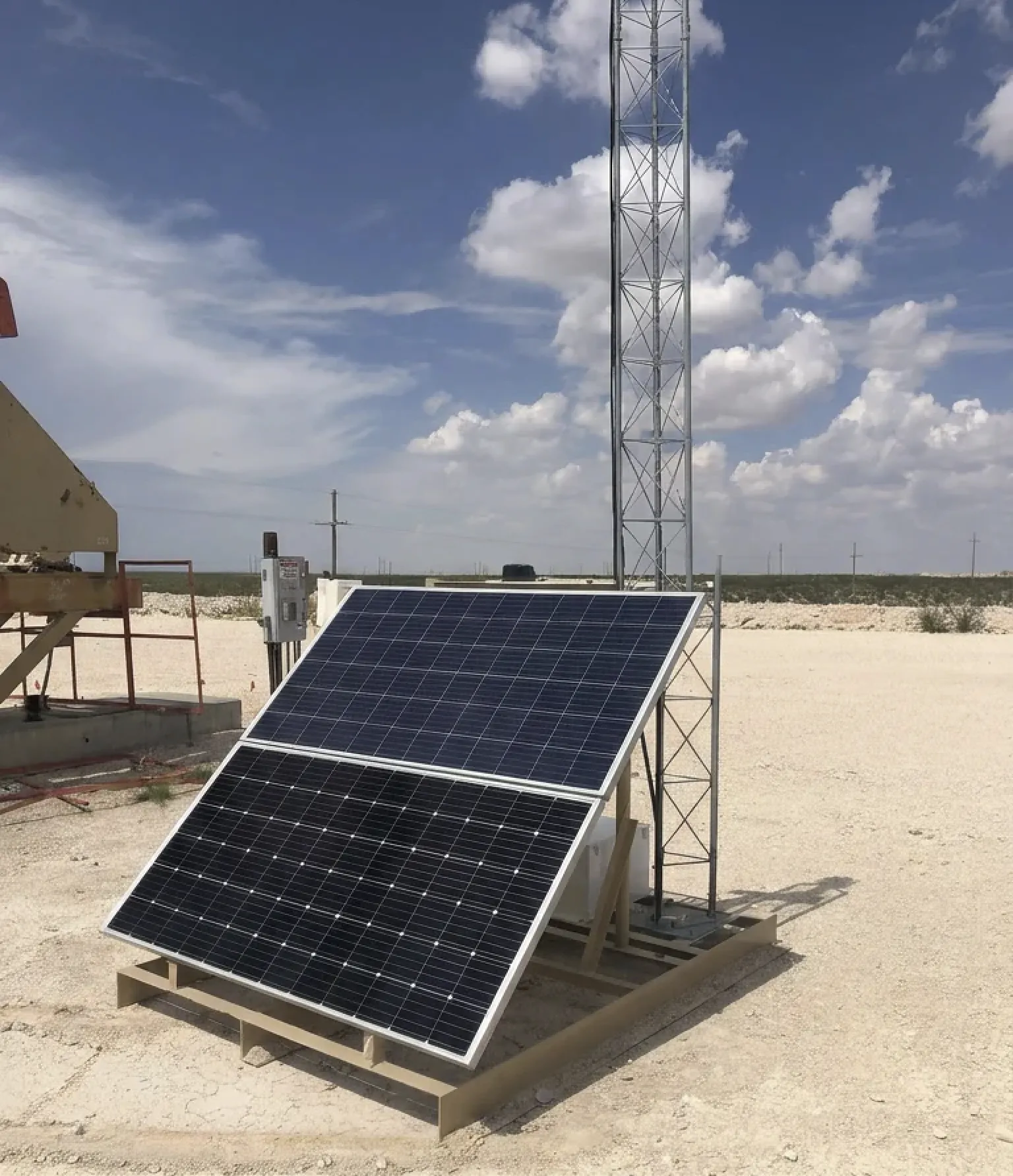
- Full installation: pole-mount, solar skid, and wireless backhaul
- Integration with the customer's SCADA and Video Management System
- VisionAery AVA tuning on Liquid Leak Detection to suppress nuisance alarms
- Deployment of remote device management for ongoing operations
- End-to-end project management from kickoff through cutover
Going the Extra Mile
Custom site-testing protocol: every install, even when it isn't required.
While many providers "install and leave," Twin Eagle performs rigorous post-installation site testing on every project. Our team physically tests and validates the cameras to confirm each VisionAery analytic is functioning properly under the real-world conditions of that specific pad.
By staging controlled events on site, including small puddles, brief sprays, vapor releases under different lighting and weather conditions, we train the AI with true positives from the actual site it's monitoring. That dramatically increases the accuracy and reliability of the overall system.
We also hand over a comprehensive device-management tool for streamlined remote management of the total site architecture, so the customer's operations team can see and control everything we deployed without juggling vendor portals.
The Results
Real ROI in under six months.
By catching leaks within seconds instead of hours or days, clean-up costs have plummeted. Based on the site's previous leak averages, the customer expects a complete return on investment in less than six months on this single pad alone.
Because of Twin Eagle's project management and demonstrated expertise in wireless, networking, and video AI, the customer easily achieved their goal of responsible, modernized operational monitoring, with a credible story to tell stakeholders about how they're using AI to prevent releases rather than just react to them.
<6 mo
Projected ROI on a single pilot site
Drastic
Reduction in spill clean-up and response cost
300+
CTB locations now in full-scale rollout
What's Next
Scaling across the Permian footprint.
Following this success, the operator is now launching a full-scale deployment of Twin Eagle's solution across more than 300 CTB locations in the Permian region, built on the same end-to-end edge AI stack proven at the pilot site.
Why It Matters
Wireless, networking, and video, under one roof.
This project is a working demonstration of what Twin Eagle does best. We built the wireless link, designed the network integration, specified and installed the cameras, wrote the analytics, and project-managed the whole engagement. That kind of single-vendor accountability is exactly what oil and gas operators need when they're scaling AI across hundreds of remote sites.