_1772746035263-CVlnBaHI.png)
Hardware Integration · Survey → Engineer → Select → Fabricate → Provision → Install
We don't just build to spec — we engineer the spec, then build it.
Twin Eagle Solutions surveys the site, engineers the configuration, selects the right hardware for the environment and the standard, and professionally integrates and provisions the enclosures, skids, trailers, and cabinets the operator wants deployed — then installs them in the field. One discipline, one accountable team, end-to-end.
Why hardware integration matters
Industrial communications hardware lives in some of the harshest environments in North America — pumpjacks at -30 °F in the Bakken, hose-down lift stations in coastal water districts, H2S service in sour gas fields, dust-loaded mining perimeters, and substation yards under 100 °C summer ambient. The same radio, the same switch, and the same enclosure will succeed in one location and fail in another. The difference is whether the integration was engineered to the environment or assembled from a parts list.
Twin Eagle Solutions runs hardware integration as a single, accountable discipline. We start with a site survey that captures NEMA rating, hazardous-area classification, power source, mounting surface, antenna line-of-sight, ambient extremes, and access constraints. We engineer the package against that survey — interior layout drawings, single-line electricals, cable schedules, thermal calculations, and a stamped Bill of Materials. We select hardware that fits the environment, the throughput, and the operator's existing fleet — vendor-agnostic, not OEM-loyal.
Then it gets built. NEMA enclosures and process cabinets are fabricated in our shop; communications skids and trailer-mounted platforms are custom-built to our engineered spec by trusted fabrication partners. Each is wired, configured, and bench-tested as a known-good system before it ships. Field crews install the package, terminate field cabling, commission the link with a written Site Acceptance Test, and hand off the closeout documentation. The operator receives a complete, configuration-locked, documented platform — not a pile of parts and a field problem.
The six stages of hardware integration
Site Survey & Environmental Assessment
Before a single part number is chosen, Twin Eagle Solutions walks the site to capture the conditions the hardware actually has to live in. We document the NEMA rating required by the location (3R for outdoor weatherproof, 4 for hose-down, 4X for corrosive coastal or H2S service), hazardous-area classification (Class I Div 2 vs general purpose), available power (AC mains, DC bus, off-grid solar window), comms backhaul (microwave LOS, fiber pull, cellular RSSI floor), mounting surface (pad, pole, skid, trailer, cabinet), wind and ice loading, ambient temperature extremes, and access constraints. Every survey ends with a written field report and photo set that drives the rest of the integration.
Engineering & Detailed Design
From the survey we engineer the package — interior layout drawings showing exact device placement and clearance, single-line electrical schematics for AC, DC, and grounding, cable schedules with labels and lengths, thermal calculations against worst-case ambient, and a stamped Bill of Materials with manufacturer part numbers. Skids and trailers add structural and transport-load drawings procured through our skid and trailer fabrication partners; process cabinets add a panel schedule and arc-flash labeling. The design is reviewed with the operator and frozen before fabrication begins so the shop builds to a documented spec, not a verbal handoff.
Hardware Selection
Twin Eagle is vendor-agnostic. We specify the radio, switch, firewall, router, antenna, surge protector, charge controller, battery bank, UPS, power supply, and ancillary hardware that actually fits the operator's environment, standards, and existing fleet — Cambium, RADWIN, Tarana, FreeWave, GE MDS, Cisco, Fortinet, Moxa, Aruba, Cradlepoint, Ericsson, Starlink, and others — without being locked to any single OEM. Selection accounts for spectrum, throughput, range, ingress rating, operating temperature, MTBF, spare-parts availability, and how the gear will be supported five years from now.
Shop Fabrication
Our fabrication shop builds the enclosures and process cabinets in-house: NEMA 3R, 4, and 4X enclosures with rails, DIN-rail accessories, cable management, sun shields, and breathers; and pre-built process cabinets that drop straight into the operator's existing rack envelope. Communications skids (lifting eyes, leveling feet, integrated solar arrays for off-grid pad deployments) and trailer-mounted comms platforms (road-legal axles and tongue jacks for rapid-deploy and temporary-site applications) are custom-built to our engineered spec by trusted fabrication partners, then outfitted, wired, and provisioned by our team. Everything is built to the engineered design — not improvised on the bench.
Provisioning & Bench Testing
Once the platform is built, every device inside it is provisioned and bench-tested. Radios are configured to the engineered link plan, switches are loaded with the production VLAN and trunk configuration, firewalls are loaded with the perimeter and segmentation policy, routers are bonded to the BGP fabric, surge protectors are bonded to the ground bar, batteries are conditioned, and DC power is verified end-to-end. We bench-test as a complete system with a documented configuration backup, point-to-point continuity sheet, photo record of the as-built interior, and a labeled wiring diagram. The package leaves the shop as a known-good system.
Field Installation & Commissioning
Twin Eagle crews mount the enclosure, set the skid, position the trailer, or rack the cabinet — then terminate field cabling, connect AC and DC, bond grounding to the site ground ring, install antennas, and commission the link. Commissioning includes bidirectional throughput, latency, jitter, packet loss, modulation and SNR readings, a portable spectrum sweep to verify a clean noise floor, and a 24-hour soak test. The signed Site Acceptance Test (SAT) report and the as-built closeout package are the formal handoff to operations.
What We Build
Platforms we engineer and provision
From a single NEMA enclosure to a fully integrated mobile communications trailer — every platform is engineered, integrated, provisioned, and bench-tested as a known-good system.
NEMA Enclosures
NEMA 3R outdoor weatherproof, NEMA 4 hose-down rated, and NEMA 4X corrosion-resistant — sized for radios, switches, firewalls, surge, DC power, and batteries with proper thermal margin and serviceable cable management.
Communications Skids
Self-contained, lift-and-set comms platforms with integrated solar array, battery bank, weatherized DC distribution, and pre-built enclosure — ideal for remote oilfield pads, water/wastewater lift stations, and off-grid utility assets.
Trailer-Mounted Systems
Road-legal mobile comms trailers for rapid-deploy programs, temporary sites, frac spreads, drilling locations, and emergency response — engineered for repeated road transport and fast field setup.
Process & SCADA Cabinets
Pre-built process cabinets that drop into the operator's existing rack envelope — Cisco switching, FortiGate firewalls, terminal blocks, and labeled cable management ready for the SCADA team to connect telemetry on day one.
Standards
Standards our integration work is built to
Every Twin Eagle Solutions integration is engineered against published industry standards and certified by tools and people that can prove it.
NEMA 3R / 4 / 4X
Enclosure ingress ratings
UL 508A-informed
Industrial control panel build
TIA-568
Copper cable certification
NFPA 780
Lightning protection
IEEE 142
Grounding (Green Book)
FCC Part 15 / 90
Licensed & unlicensed RF
Class I Div 2
Hazardous-area capable
DOT trailer
Road-legal mobile platforms
Use Case Spotlight
Hardware integration in the field
Two engagements where the survey-engineer-select-fabricate-provision-install discipline shows up in the real world — one at multi-basin scale, one against a specific legacy radio fleet.
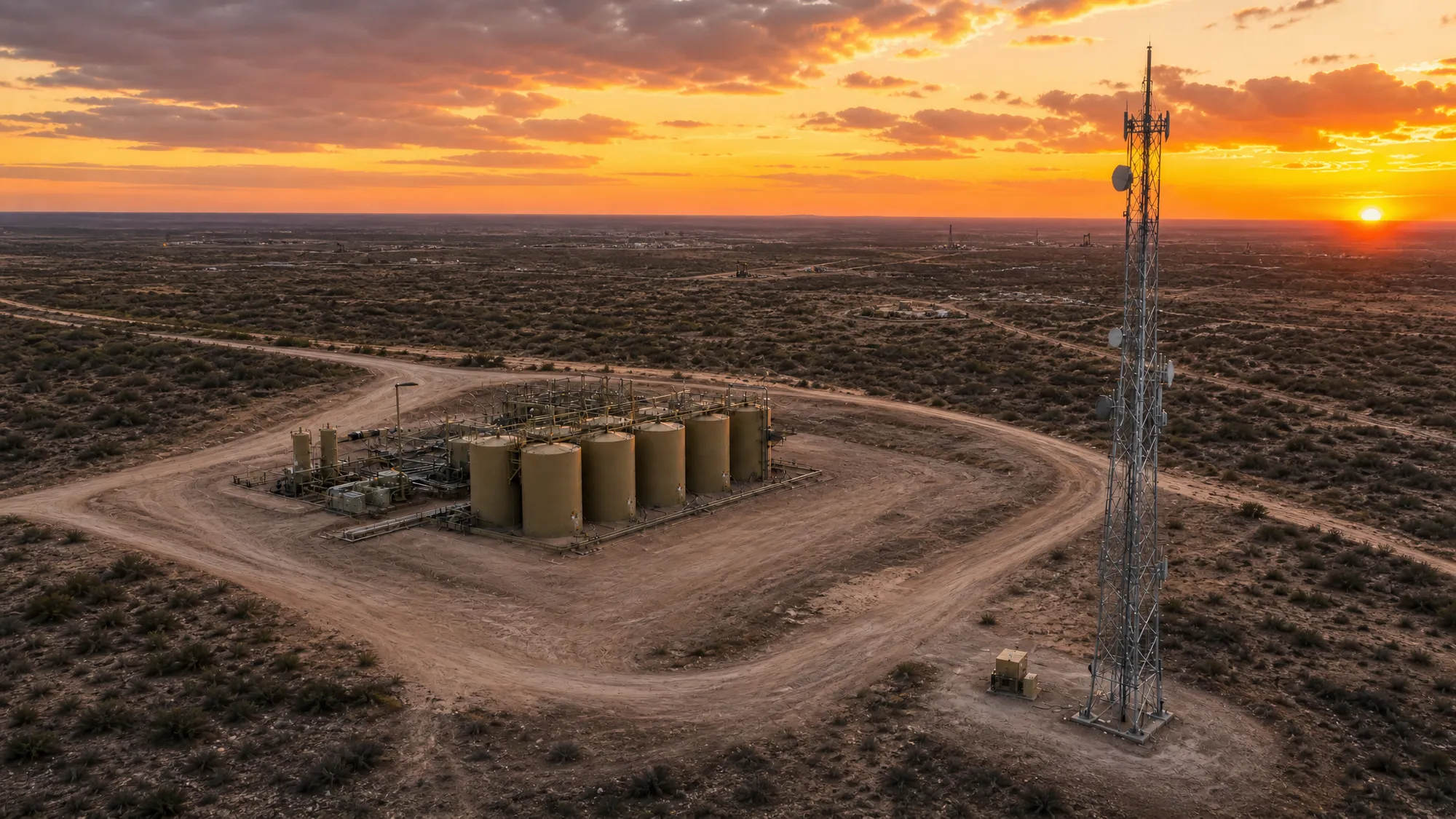
Proactive Managed Services for Enterprise Process Control Networks
Twin Eagle co-designed, built, and now fully manages a multi-basin Cambium microwave, PTMP, and TropOS mesh network on Cisco — every enclosure surveyed, engineered, fabricated, provisioned, and installed by our team, with 24/7 callout and dispatch support across the Eagle Ford and Permian since 2019.
Callout & dispatch support across two basins
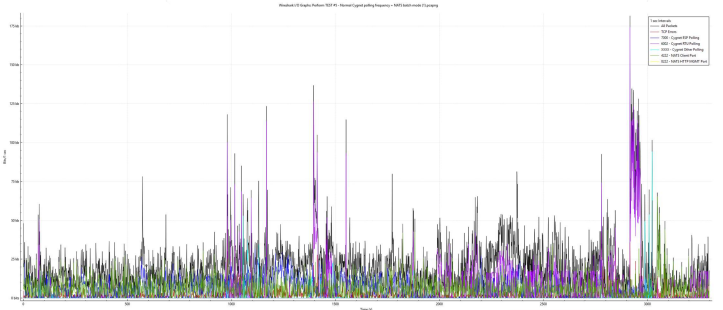
Validating MQTT on a Legacy 900 MHz Xetawave SCADA Network
Twin Eagle ran a five-scenario, packet-level network performance evaluation on the operator's existing Xetawave SCADA radios — proving NATS/MQTT overlay was viable at zero adverse impact, end-to-end engineered against the deployed hardware fleet.
Packet loss across all five test scenarios
Frequently asked questions about hardware integration
What is hardware integration at Twin Eagle Solutions?
It's our end-to-end discipline for delivering communications hardware: site survey, engineering, hardware selection, shop fabrication, provisioning, bench testing, and field installation. Instead of buying parts from a distributor and improvising in the field, the operator gets a fully engineered, factory-built, configuration-locked enclosure, skid, trailer, or cabinet that arrives on site as a known-good system.
Why start with a site survey instead of a quote?
Because the same radio, the same switch, and the same enclosure will fail in the wrong environment. The NEMA rating, hazardous-area classification, power source, mounting surface, antenna line-of-sight, and ambient conditions drive the entire design. We capture them in person — with photos and measurements — before specifying anything.
Are you tied to a specific hardware vendor?
No — Twin Eagle Solutions is not tied to any single vendor. That said, we do have a preferred shortlist of vendors we like to work with because of the quality and field reliability of their product — Cambium, RADWIN, Tarana, FreeWave, GE MDS, Cisco, Fortinet, Moxa, Aruba, Cradlepoint, Ericsson, Starlink, and others. Final selection is always driven by what's right for the environment, throughput, spectrum, operating temperature, ingress requirement, and the operator's existing fleet — not by an OEM relationship.
What kinds of platforms do you build?
NEMA 3R / 4 / 4X enclosures, communications skids with integrated solar and battery, trailer-mounted comms platforms with road-legal axles, and pre-built process cabinets that drop into the operator's existing rack envelope. The enclosures and process cabinets are fabricated in our shop; the skids and trailers are custom-built to our engineered spec by trusted fabrication partners, then outfitted and provisioned by our team. All four are delivered against engineered drawings and a stamped BoM.
Do you provision the network gear before it ships?
Whenever the design information is locked in ahead of fabrication, yes — every radio, switch, firewall, router, and ancillary device is configured to the production design (VLANs, BGP, QoS, firewall policy, link plan, firmware version) and bench-tested as a complete system before it leaves the shop. When details are still being finalized at the customer's end, we'll provision on site instead. Either way, the install lands as a known-good system with documented configuration backups and a labeled wiring diagram.
Can you build to Class I Div 2 for hazardous oilfield locations?
Yes — when it's required. C1D2 is a capability rather than our default standard. Where the location classification calls for it, we specify Class I Div 2 rated radios, switches, enclosures, surge devices, and ancillaries, and coordinate the integration with the operator's safety / process safety team during design.
What does a typical engagement look like end-to-end?
Survey the site, deliver an engineered design with a Bill of Materials stamped by a certified RF engineer, get a signed SOW from the customer, fabricate in the shop, provision and bench-test (or provision on site when needed), ship, install with our own crews, commission with a written Site Acceptance Test, and hand off the closeout package — interior photos, configuration backups, alignment records, ground-resistance readings, and the as-built diagram. Then it flows directly into our 24/7 callout-supported managed services.
Do you handle off-grid solar power for remote sites?
Yes. We size and integrate solar arrays with battery banks against the actual radio, switch, and ancillary load — including margin for charge controller losses, battery aging, and worst-case insolation — and build the DC distribution, charge controllers, and battery enclosures right into the skid or trailer.
Where can the finished platforms be deployed?
Anywhere our operators run — oil & gas pads and central facilities, water and wastewater lift stations and treatment plants, utility substations and re-closer sites, mining perimeter and concentrator assets, and emergency / rapid-deploy applications. The platforms are engineered for the environment of the deployment.
Related disciplines
01 · Plan & Design
RF & Network Engineering
Brownfield audits, RF surveys, link budgets, FCC licensing, IP architecture.
02 · Build & Install
Construction & Field Deployment
Tower civils, foundations, climbers, fiber termination, and SAT.
03 · Operate & Manage
24/7 Managed Network Services
24/7 callout & dispatch, fault isolation, cybersecurity, and lifecycle management.
Have an enclosure, skid, trailer, or cabinet program coming up?
Tell us the site, the environment, and the scope. We'll come back with a survey plan, a hardware short-list, and a real fabrication quote — engineered, not estimated.