_1772746035263-CVlnBaHI.png)
Tower Discipline · UAS Inspection
FAA Part 107 Drone Tower Inspection
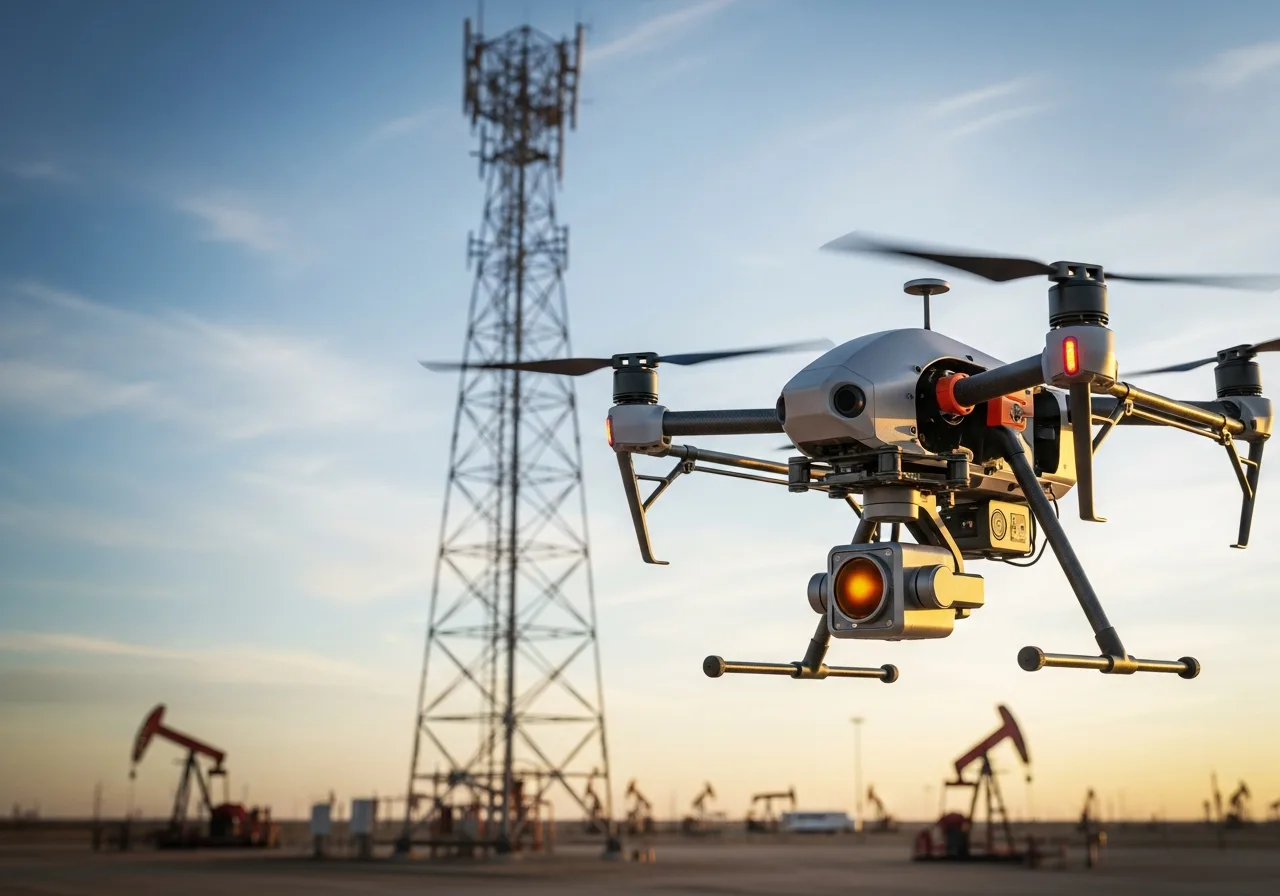
Visual drone inspection of communications towers, antennas, lighting, and grounding, captured by Twin Eagle's FAA-certified Remote Pilots and delivered as a structured report with anomaly logs and prioritized remediation. Faster, safer, and lower-cost than a full climb for routine condition surveys.
Why drone inspection earned a place on the tower
Tower inspection used to be a binary choice: send a climber, or don't inspect. Climbing inspections are necessary for hands-on testing such as bolt torque, grounding continuity, sweep testing, and hardware swaps, but they are expensive, time-consuming, and they put a person at the top of a structure. The result is that many tower owners under-inspect, and condition issues are found late.
Drone inspection changes the economics. An FAA Part 107 sUAS captures the visual condition of the entire structure in a few hours, at every azimuth and elevation in high resolution. The result is a richer condition record at a lower cost, which means tower owners can actually inspect on the schedule the structure deserves.
Twin Eagle Solutions runs drone inspection as a real discipline, not a side project. Our pilots are FAA Part 107 certified with current Remote ID compliance, we coordinate controlled airspace through LAANC, we operate under written waivers for BVLOS work when the inspection requires it, and we deliver structured reports (not raw imagery dumps) that the customer's engineers can actually act on.
Five capabilities our drone program delivers
Visual Condition Inspection
Twin Eagle Solutions' FAA Part 107 remote pilots fly high-resolution visual inspections of communications tower structures, capturing sub-centimeter imagery of welds, bolts, member condition, anchor hardware, guy-wire terminations, ice-bridge condition, paint and corrosion, and any visible structural anomaly. Imagery is captured against a documented flight plan and tied to tower elevation, azimuth, and member identification so that anomalies are traceable in the deliverable.
Antenna Alignment & RF-Visual Verification
Drone-captured imagery verifies antenna azimuth, down-tilt, mechanical alignment, and clear-line-of-sight against the path study, without sending a climber to the top of the tower for a measurement. For microwave and PTP/PTMP links, the drone-confirmed alignment is correlated with the link's RSSI/SINR telemetry so RF and physical alignment are validated together.
FAA Lighting & Beacon Inspection
Drone inspection is the safest way to verify FAA AC 70/7460-1 obstruction lighting, beacon condition, photocell function, and lens cleanliness, particularly on tall structures and in icing conditions. Twin Eagle documents beacon and obstruction-light condition so failures are caught and corrected before they trigger an FAA NOTAM.
Reporting, Deliverables & Documentation
Every drone inspection closes out with a structured deliverable: an executive summary, a labeled visual photo set, an anomaly log keyed to tower elevation and member identification, a recommended remediation list with priority, and a comparison set against any prior inspection if the customer has historical baseline imagery. Reports are delivered in PDF and as a digital archive; raw imagery is provided on request.
FAA Compliance & Flight Safety
Twin Eagle Solutions' drone program operates under FAA Part 107 with current Remote Pilot certifications, Remote ID compliance, documented airspace coordination (LAANC for Class B/C/D/E controlled airspace, written ATC coordination where required), TFR and NOTAM checks before every flight, drone insurance, and a documented flight-safety program. We do not fly in restricted airspace without authorization, and we do not fly outside Part 107 limits without an FAA waiver in hand.
Regulatory & Engineering Standards
Standards & frameworks our flights follow
Drone inspection only matters if it is flown legally and inspected against published condition standards. Below is the working set our team operates under.
FAA Part 107
Small UAS commercial operations
FAA Remote ID
Drone identification compliance
FAA AC 70/7460-1
Tower marking & lighting
TIA-222 Rev. H
Tower inspection standard
LAANC
Controlled-airspace authorization
OSHA 1926
Reduced climb exposure
Frequently asked questions about drone tower inspection
What is a Part 107 drone tower inspection?
A Part 107 drone tower inspection is a tower condition survey performed by an FAA-certified Remote Pilot in Command (RPIC) using a small unmanned aircraft system (sUAS) operating under 14 CFR Part 107. The drone captures visual imagery of the tower structure, antennas, lighting, and grounding from elevations and angles that would otherwise require a climb. Twin Eagle Solutions performs the flight, processes the imagery, and delivers a structured inspection report with anomaly logs and recommended remediation.
When should we choose a drone inspection over a climbing inspection?
Drone inspection is well-suited for routine annual condition surveys, FAA lighting verification, antenna alignment checks, post-storm damage assessment, and any inspection where the goal is to document condition without disturbing equipment. A climbing inspection is preferred when hands-on hardware testing (bolt torque, grounding continuity, sweep testing, equipment swaps, repairs) is required. Twin Eagle Solutions performs both and recommends the right method per inspection.
How long does a drone tower inspection take?
A single-tower visual inspection typically requires 2 to 4 hours of on-site work and an additional 2 to 5 business days for image processing, anomaly review, and report production. Multi-tower routes are scheduled together to amortize mobilization. Twin Eagle Solutions delivers a draft report for customer review before final issue.
What deliverables do we receive?
An executive summary, a labeled visual photo set keyed to tower elevation and member identification, an anomaly log with prioritized recommendations, FAA lighting verification, antenna-alignment verification, and a comparison view against prior baseline imagery if available. Deliverables are provided as PDF reports plus a digital archive; raw imagery is available on request.
Are drone inspections accepted as TIA-222 inspections?
TIA-222 condition assessments traditionally rely on a hands-on climbing inspection, but drone-captured imagery is widely used today as supplemental documentation and as primary documentation for visual condition assessment between climbing intervals. Twin Eagle Solutions can pair drone inspection with a periodic climbing inspection for full TIA-222 compliance, and we document the inspection method on every report.
What about controlled or restricted airspace?
Twin Eagle Solutions checks airspace before every flight. In Class B, C, D, and E controlled airspace we operate under LAANC authorization or written ATC coordination. We do not fly in restricted airspace, prohibited areas, or under TFRs without an FAA waiver in hand. For BVLOS operations or operations over people, the operation is conducted under the appropriate Part 107 waiver.
Is the drone program insured?
Yes. Twin Eagle Solutions carries commercial drone liability insurance and provides certificates of insurance on request. The drone program is operated as part of Twin Eagle's broader commercial-aviation and field-services insurance coverage.
Can drone inspection find lightning damage and grounding faults?
Visual drone inspection is highly effective at finding lightning-damaged hardware, missing or melted grounding components, and burned coax or transmission lines that are visible from the structure. Confirming grounding continuity, however, requires hands-on testing that is performed on the follow-up climbing visit.
Where do you operate?
Twin Eagle Solutions performs drone inspections across the continental United States, with the highest concentration of work in oilfield basins (Permian, Eagle Ford, Bakken, DJ, Anadarko / SCOOP / STACK, Marcellus, Haynesville) and in adjacent utility, water/wastewater, and mining regions. Mobilization windows are typically within one to two weeks of scope confirmation.
Related disciplines
Tower Discipline · Turn-Key Builds
Turn-Key Tower Builds
End-to-end coordination of new tower builds (survey through commissioning) with steel erection performed by vetted partners.
Tower Services Overview
Tower Climbing & Aerial Services
Full-service tower climbing, aerial-lift work, drone inspection, and turn-key build coordination, all under one roof.
Annual inspection due, or storm to assess?
Tell us the site, the structure, and the inspection scope. We'll come back with a flight plan and a quote, usually within one business day.